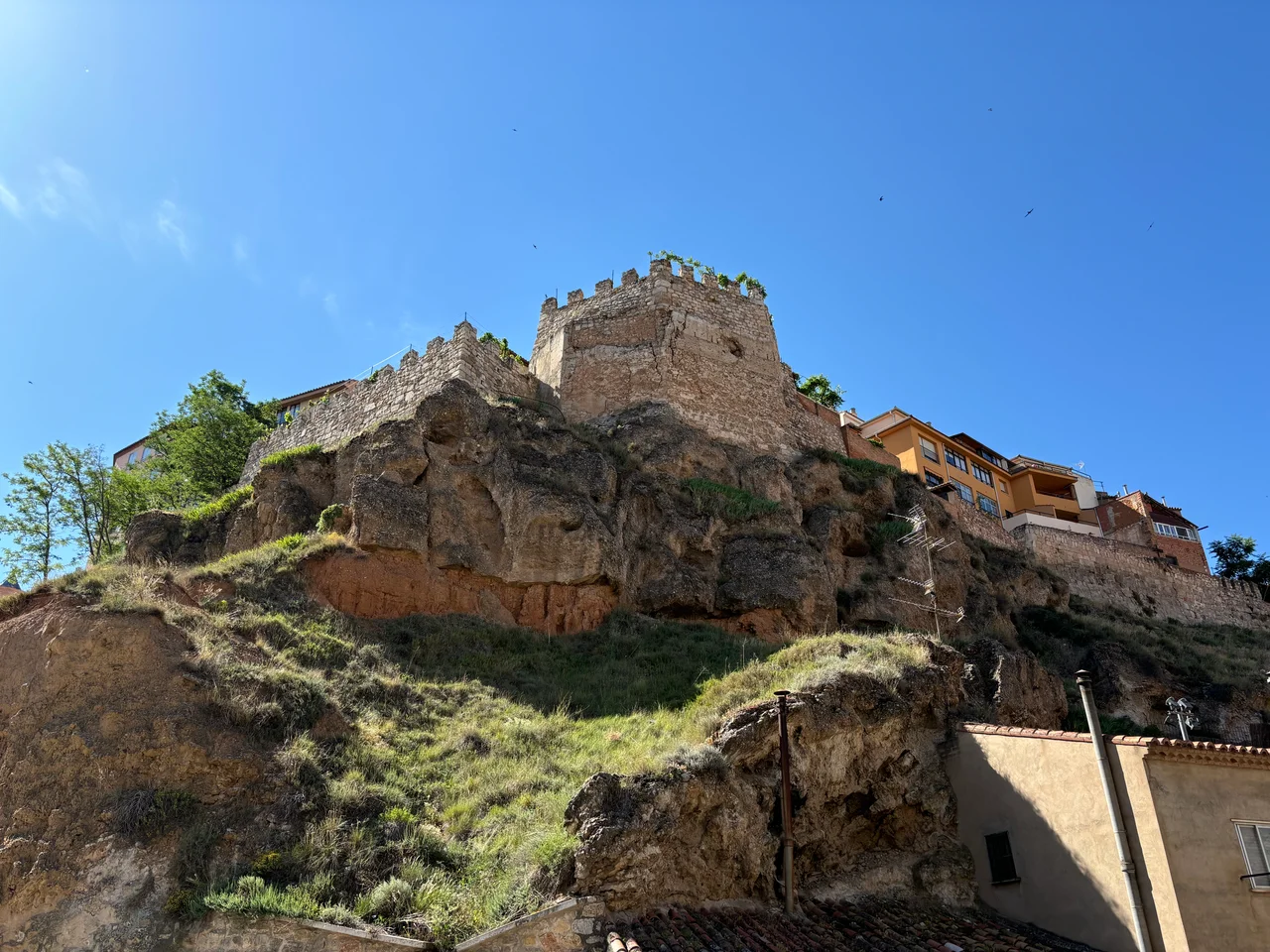

Teruel
In 1999 a group of citizens grew so tired of being forgotten that they built a campaign around two defiant words: Teruel existe - "Teruel exists." It sounds like a joke until you learn the context. This provincial capital, perched above 900 meters on a cold, remote plateau in southern Aragon, remains the only one in peninsular Spain still without a direct rail link to Madrid. For decades the trains, the motorways, and the investment all went elsewhere. So Teruel, a town of some 36,000 people, decided it would simply insist on its own existence - and, slowly, the country began to listen.
The Town of Brick and Tile
Teruel calls itself the town of Mudéjar, and its skyline earns the name. Slender towers of ochre brick and glazed ceramic rise over the old quarter - among them San Pedro, San Martín, and the tower of the cathedral - raised by Muslim craftsmen working under Christian rule between the 13th and 16th centuries. Together with other Mudéjar monuments across Aragon, they make up a UNESCO World Heritage Site. Walk the compact center and you are never far from one; the towers orient the whole city the way spires do elsewhere, catching the light long after the streets below have fallen into shadow.
A Cold, High Silence
The land itself explains much about Teruel. The city sits at 915 meters, high enough that winter nights can plunge toward −10°C, and rain here is scarce. That thin, dry, punishing air kept the population small and the place quiet; winters are famously cold for Spain. Isolation shaped the city's temperament. Curiously, Teruel lies closer to Valencia and the Mediterranean than to Zaragoza, its own regional capital to the north - a geographic quirk that has always tugged the town toward the coast for its trains, its flights, and its friendships.
Dinosaurs and Cured Ham
Two of Teruel's proudest possessions could hardly be less alike. The rock outcrops around the city hold some of the oldest dinosaur remains on the Iberian Peninsula, now celebrated at Dinópolis, a sprawling paleontology park just outside town. And then there is the ham. Teruel's jamón serrano, cured slowly in that same cold, dry mountain air, carries a protected reputation; locals will steer you to the delis in the center and tell you flatly that it is superb. Add the region's traditional pottery, and you have a place that trades in deep time and good taste in equal measure.
The Lovers of the Old Town
Teruel guards Spain's most famous tragic romance. In a mausoleum beside the church of San Pedro lie the Lovers of Teruel, Diego and Isabel, whose thwarted love and near-simultaneous deaths - set here in the year 1217 - grew into a legend told across the country. The city has made the story entirely its own. Each February it stages Las Bodas de Isabel de Segura, dressing thousands of residents in medieval costume to replay the doomed betrothal through the streets, turning centuries-old heartbreak into a shared, joyful spectacle.
Meringue at the Town Hall Door
Teruel throws itself into its festivals with real abandon. The biggest is La Vaquilla del Ángel, held over the long weekend nearest the 10th of July, when some twenty cultural associations stage more than a hundred free concerts - and one gloriously strange local rite: pelting the door of the town hall with meringue. At Easter, drummers in full ceremonial dress fill the streets with a relentless, thunderous beat. Between festivals, ordinary life gathers in the Plaza del Torico, the little central square watched over by the tiny bull statue that gives it its name.
From the Air
Teruel's old town crowns high ground on the Aragonese plateau at about 40.34°N, 1.11°W, its Mudéjar towers standing out sharply against terracotta roofs and pale surrounding hills. At 915 m elevation the air is often exceptionally clear, best appreciated on an unhurried low pass; winter can bring hard frost and occasional low cloud. Teruel Airport (LETL) lies just west of the city, with Valencia (LEVC) roughly 130 km southeast and Alicante-Elche (LEAL) farther down the Mediterranean coast.
Nearby Stories
- Penyagolosa 33 km away
- Rock Art of the Iberian Mediterranean Basin 36 km away
- Serra Calderona 43 km away
- Cuenca Cathedral 43 km away
- Morella 51 km away
- Castle of Alarcon 65 km away
- Battle of Belchite (1937) 87 km away
- Castle of Gormaz 144 km away