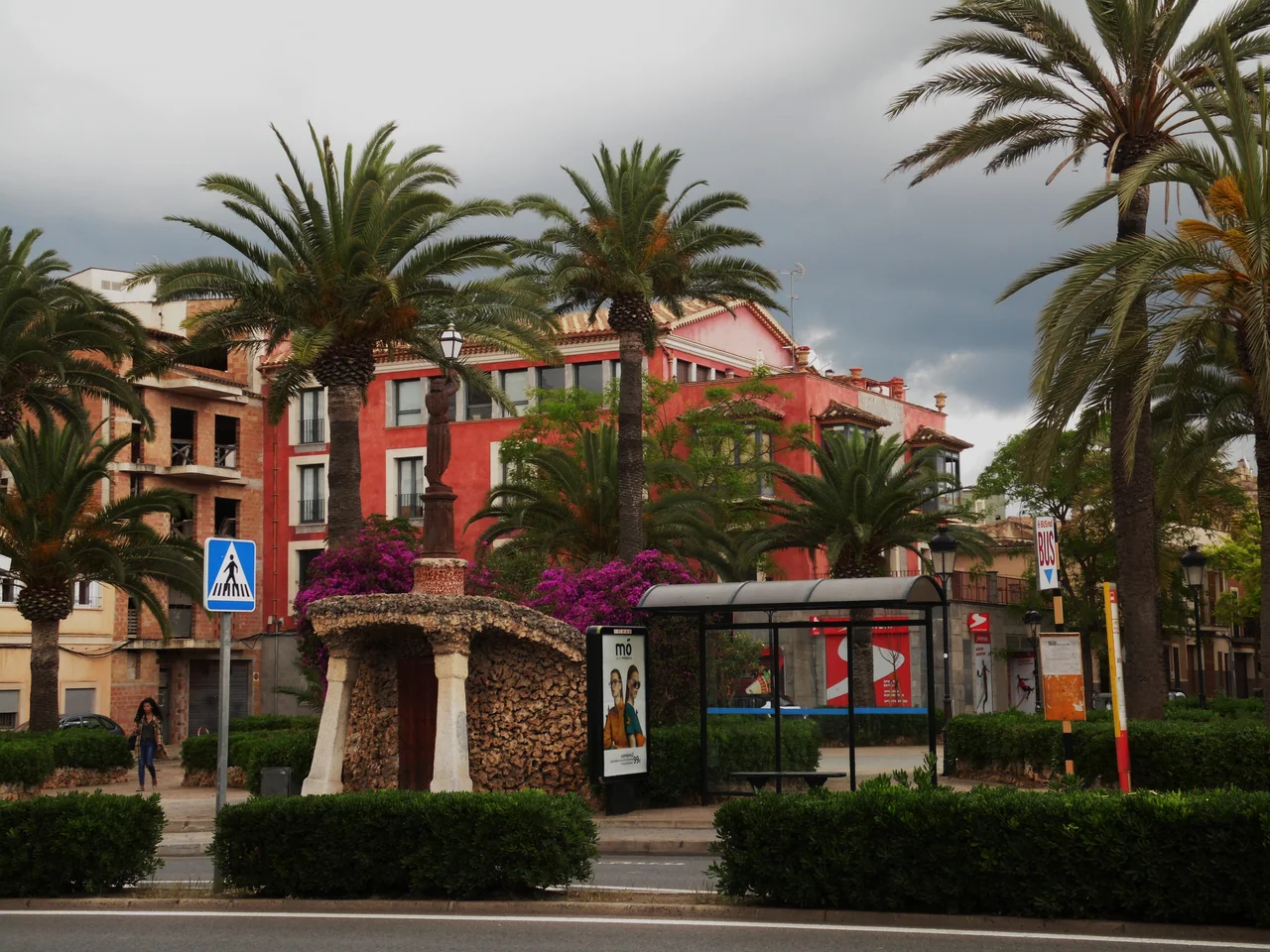

Manacor
A dozen taxi drivers have all but worn a groove into the road between Palma's airport and a tennis academy on the southern edge of Manacor. They make the run again and again, ferrying players and their families to the campus that Rafael Nadal built in his hometown. Manacor is not a place most visitors linger — an inland farming town in the Llevant region of Mallorca, it governs a string of glamorous beach resorts that long ago outgrew and outshone it. Yet the whole island bends toward it, because this unassuming town of some 34,000 produced one of the greatest athletes who ever lived.
The Boy from the Llevant
Rafael Nadal was born in Manacor in 1986 and never really left. Over two decades at the top he won 22 Grand Slam singles titles, 36 Masters crowns, and Olympic gold, playing with a ferocity that made him nearly unbeatable on clay, before cumulative injuries finally ended his career in 2024. In 2016 he opened a tennis academy on the edge of town, a residential campus that now trains everyone from hopeful juniors to established professionals passing through between tournaments, with sister centres as far away as Mexico, Greece, and Kuwait. A museum on the grounds displays his trophies — which, as the locals dryly note, he happened to win at tennis. In recognition, Spain's king made him the first Marquess of Llevant de Mallorca.
A Town Older Than Tennis
Long before Nadal, Manacor was a seat of power. The Torre del Palau, a stone tower standing a block north of the main church, is all that survives of a palace once held by Jaume I, the king who took Mallorca in the 13th century. Nearby, the church of Sant Vicenç Ferrer dates to around 1700. And out along the Ma-15, half-hidden near a country turn-off, lie the foundations of a Christian church from the 5th century; its delicate mosaics were long ago moved to the town museum, while the ruins themselves sit open to the fields, with a gate you are politely asked to close so the sheep stay out. The parish church of Mare de Déu dels Dolors anchors the old centre nearby.
Pearls That Never Grew in an Oyster
Manacor's other great export never came from the sea floor. At the turn of the twentieth century, the town became home to Majorica, a factory that learned to manufacture artificial pearls so convincing they are said to be nearly indistinguishable from the real thing. The technique draws on the shimmer of fish scales, layered and polished into orbs by the millions each year, and for decades the trade carried Manacor's name into jewellery shops far from Mallorca. In a town where tourists are sparse and few stay the night, the pearl workshops gave the local economy a lustre entirely its own.
Fire and Demons in January
Come the middle of January, Manacor sheds its quiet. The festival of Sant Antoni, held on the 16th and 17th, fills the streets with foguerons — great bonfires built with such artistry that people wander the town simply to admire them before they burn. At their centre are the dimonis, costumed demons who represent the temptations that Saint Anthony resisted in the desert. Here, though, the devils are not fearsome but mischievous, dancing through the crowds to pounding drums. In Manacor the dimonis are received almost like rock stars, and for two nights the sober agricultural town becomes the most riotous place on the island.
Where the Karst Begins
Manacor's municipality runs all the way to the sea, and its coast is honeycombed with limestone. Just east, the harbour town of Porto Cristo guards the entrance to some of the most famous show caves in Europe, where visitors drift by boat across an underground lake. The town's wine, like most on Mallorca, runs red. It is an easy place to pass through on the way to the beaches — and an easy place to underestimate, right up until you notice how many roads on this side of the island quietly lead back to it.
From the Air
Manacor sits at 39.57°N, 3.21°E, inland in the Llevant region of eastern Mallorca, roughly midway between the Bay of Palma and the island's east coast. From 3,000–5,000 feet it reads as a compact town at the hub of the MA-15 highway, ringed by the geometric patchwork of almond and cereal fields that define the interior plain. The coast east of town — Porto Cristo and the resort strip of S'Illot and Cala Millor — makes a useful visual anchor. Palma's LEPA lies about 45 kilometres to the west-southwest and handles nearly all island traffic; Menorca's LEMH sits across the sea to the northeast. Inland visibility is usually excellent outside the summer heat haze.
Nearby Stories
- Taifa of Majorca 5.7 km away
- Cala Galdana 9 km away
- Cap de Formentor 13 km away
- Capture of Minorca (1708) 31 km away
- Illa de Tagomago 107 km away
- Cala de Sant Vicent 154 km away
- Llobregat Delta 166 km away
- Shipwreck of Dellys 274 km away